Could better sleep help new mothers recover? SleepMOM project: poster presentation at PSIM 2026
For many new mothers, sleepless nights are simply seen as part of the job. But what if persistent sleep problems are more than just a consequence of having a baby - and could actually affect recovery, mental health, physical activity and pain within this population?
When sleepless nights become insomnia
Poor sleep quality and frequent night awakenings are common after childbirth, but for some women, sleep problems persist well beyond the first few months. Postnatal insomnia refers to ongoing difficulties falling asleep or staying asleep during the postnatal period, independent of how the baby sleeps. Yet these problems are still too often dismissed as an inevitable part of motherhood.
The causes are complex. Hormonal and psychological changes, anxiety around motherhood, genetic factors and major disruptions to circadian rhythms can all play a role. And poor sleep is not simply about feeling tired the next day. It is closely linked to a higher risk of postnatal depression and anxiety, reduced physical activity and increased pain sensitivity.
We know that cognitive behavioural therapy for insomnia (CBT-I) and behavioural sleep interventions can be effective in the general population with insomnia. However, these approaches have barely been studied in women in the later postnatal period (from around four months postpartum onwards). Even less is known about interventions specifically adapted to the realities of life with a baby.
Designing an intervention that works with motherhood — not against it
At PSIM26, I presented the protocol of the Sleep-MOMagement RCT, in which we investigate two behavioural approaches to postnatal insomnia, both delivered by physiotherapists.
Before testing an intervention in a large-scale trial, however, we first need to understand whether it is feasible for the women we aim to support. Life with a young baby rarely follows a predictable schedule. Feeding, night-time awakenings and constantly changing sleep patterns can make rigid treatment protocols difficult to follow. The aim of this pilot RCT is therefore to assess whether the interventions are feasible, acceptable and well tolerated, while also exploring their potential clinical and economic benefits.
Participants are randomly allocated to one of two intervention groups or to treatment as usual. The two interventions take different behavioural approaches to improving sleep and overall well-being during the postnatal period. Both are delivered by physiotherapists in a hybrid format, designed to make participation more accessible and to accommodate the realities of life with a young baby. Ultimately, the goal is not to expect mothers to adapt their lives to an intervention, but to design an intervention that can adapt to the realities of motherhood.
Looking beyond sleep
One of the most interesting aspects of SleepMOM is that we do not view sleep in isolation. We hypothesize that sleep is closely intertwined with daytime activity, circadian rhythms, mental health and pain.
That is why SleepMOM takes a broad approach. In addition to insomnia symptoms, we assess sleep using both sleep diaries and actigraphy, capturing women’s own experiences alongside objective measures of their sleep patterns. We also assess physical activity, mental health and pain, recognising that these factors are closely interconnected with sleep.
Finally, we will explore whether factors such as self-efficacy, treatment credibility and the working alliance with therapists help explain for whom the interventions work and under which circumstances. Adherence rates will help us understand how feasible the interventions are in everyday life, while qualitative data will provide insight into women’s experiences of the interventions, including what they found helpful, or challenging.
From poster to practice
Presenting the SleepMOM protocol at PSIM26 was a great opportunity to share the project and discuss its relevance with researchers and clinicians. The relationship between sleep and pain was a recurring theme throughout the conference. These discussions reinforced the idea that sleep should perhaps not be viewed as an isolated symptom, but as one potential piece of a much bigger picture involving physical activity, mental health, pain and recovery. With SleepMOM, we hope to take a step towards accessible, behavioural interventions for postnatal women.
Manon De deyne
2026Pain in Motion
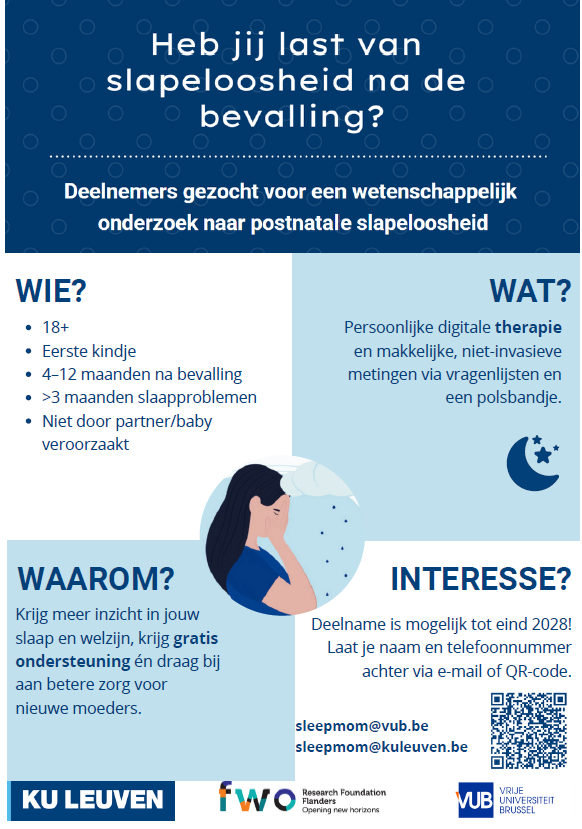
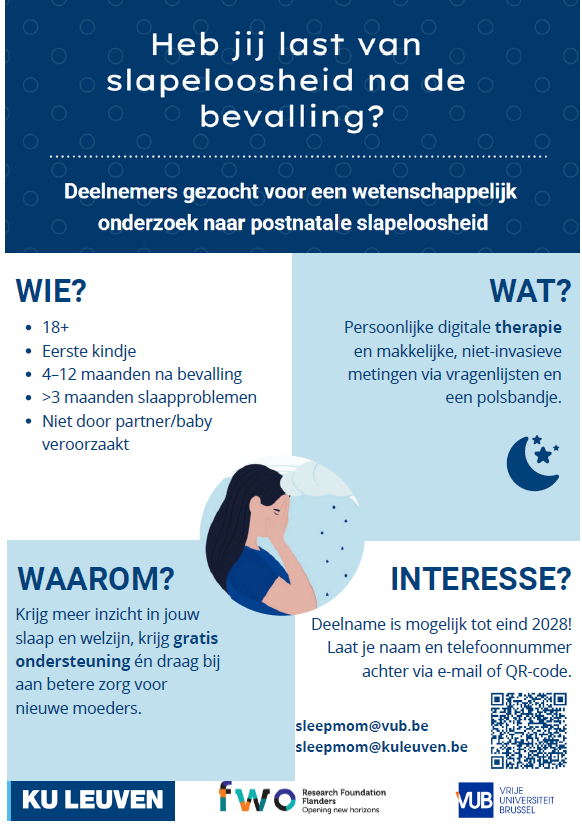
Interesse in deelname, of ken je iemand die interesse kan hebben? Bekijk onderstaande poster!
References and further reading: