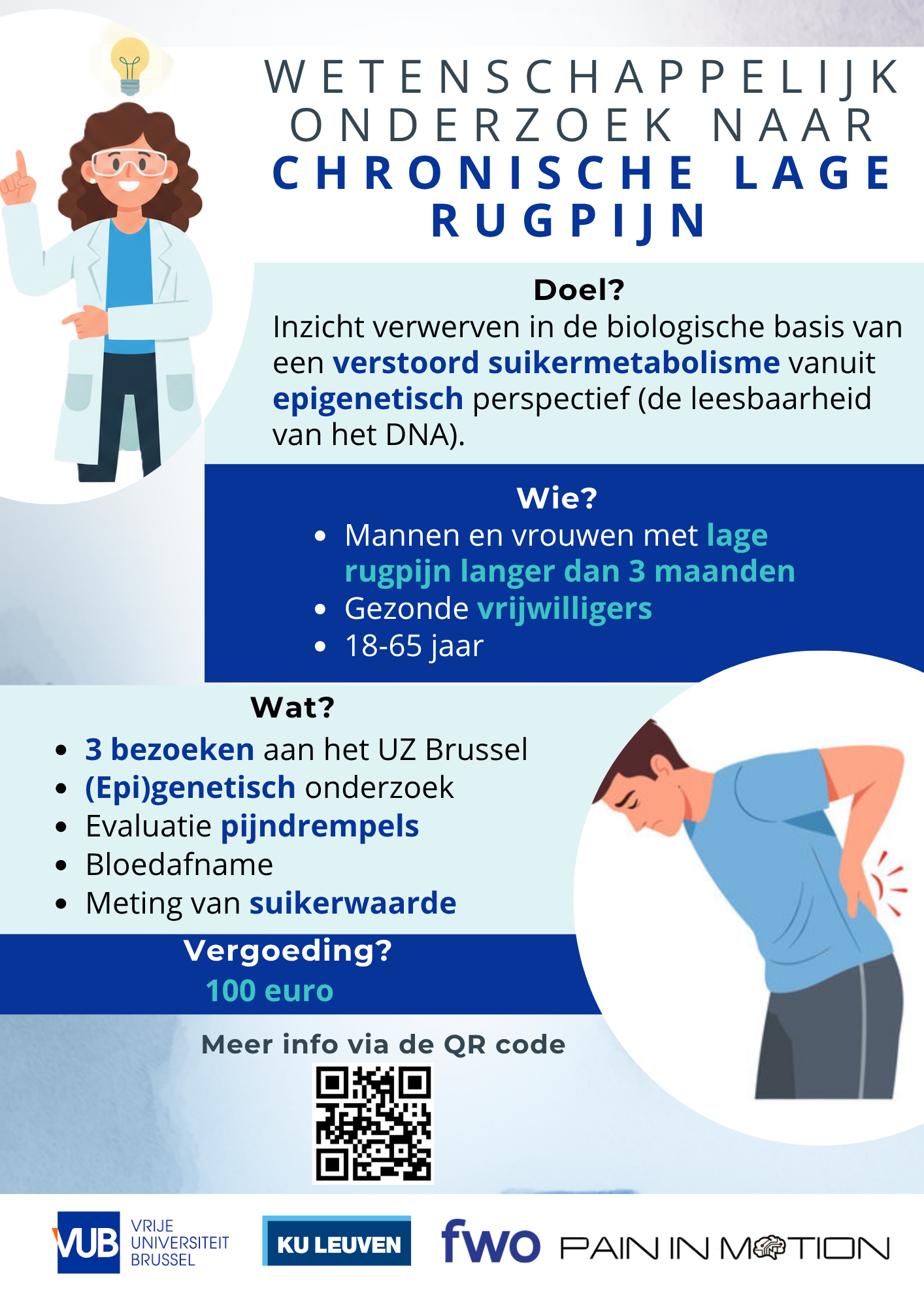
Could your back pain be linked to how your body metabolizes sugar?
What is chronic low back pain?
Chronic low back pain (CLBP) remains one of the most common health problems worldwide (1). It refers to pain in the lower back that persists for several months or longer. In most people with CLBP, doctors cannot identify one specific structural cause of the pain. This is known as non-specific CLBP (2). Although there may not be a clear identifiable cause, patients with non-specific CLBP can experience persistent pain, reduced physical functioning, and a lower quality of life.
What does sugar metabolism have to do with low back pain?
Glucose metabolism, or the way our body regulates and uses sugar in the blood, has attracted increased attention in CLBP research. When we eat, glucose enters the bloodstream, making our body release insulin, which helps cells take up glucose and use if for energy. When this system does not work properly, blood glucose levels can remain higher than expected after eating, and this can be an early sign of metabolic dysfunction.
Previous research has suggested that people with CLBP may have alterations in glucose metabolism. Research from our own group found that patients with CLBP had a higher increase in blood glucose after consuming a specific beverage compared with healthy controls (3). This raises an important question: Why might CLBP be associated with changes in glucose metabolism? At the moment, we do not have a clear answer yet.
Could the IGF1/GH axis provide a missing link?
A possible axis that might contribute to this phenomenon is the insulin like growth factor 1/growth hormone (IGF1/GH) axis. This axis plays an important role in metabolism, by influencing how the body responds to insulin and helps regulate glucose availability (4). At the same time, evidence suggests that the IGF1/GH system is also involved in pain processing mechanisms (5). As such, if this hormonal axis is altered in people with CLBP, it could potentially contribute to both changes in glucose metabolism and in pain processing.
Could changes in DNA methylation be involved?
Another biological process that might be of interest is DNA methylation. DNA contains genes that act as instructions for our cells to function. However, not all genes are needed at all time, and our cells have mechanisms that help determine which genes are switched on and which are switched off. One of these mechanisms is DNA methylation.
DNA methylation involves the addition of small chemical groups called methyl groups to specific regions of the DNA. These chemical modifications are known to reduce the activity of the specific genes they are bound to (6). Think of it as an off-switch, helping to determine which genes are turned off.
This means that changes in DNA methylation could potentially influence the activity of genes involved in the IGF1/GH axis. In turn, this could affect processes related to both glucose metabolism and pain processing.
What are we investigating in the GLOW study?
In our study we will compare people with CLBP and healthy controls. Participants will wear a continuous glucose monitor, allowing us to track their glucose levels throughout the day. They will also consume standardized nutritional interventions, while their glucose responses to everyday meals will be monitored. Furthermore, blood samples will be collected to compare DNA methylation patterns of IGF1/GH axis genes between CLBP patients and healthy controls.
By combining these different measurements, we hope to better understand how CLBP and impaired glucose metabolism may be biologically connected.
Why does this research matter?
The ultimate goal is not simply to show that people with CLBP have different glucose responses. We want to understand why these differences occur. By investigating the relationship between glucose metabolism, the IGF1/GH axis, DNA methylation and pain, we hope to contribute to a better understanding of the biological link between CLBP and impaired glucose metabolism.
In the longer term, identifying biological mechanisms and molecular changes associated with CLBP could help researchers identify potential biomarkers and better understand which biological pathways may be involved in these conditions.
Interested in participating?
Are you between 18 and 65 years and interested in contributing to our research on CLBP and glucose metabolism? In this case, visit our website: https://paininmotion.be/glow to learn more about the GLOW study or find out whether you may be eligible to participate. You can also contact us at glow@vub.be
Thank you!
Jinane Ben Amar
Who am I?
I am Jinane Ben Amar, a PhD researcher at the Pain in Motion research group of VUB and the Environment and Health unit of KU Leuven. I obtained a Master’s degree in Biomedical Sciences, which forms the basis of my background in biomedical and translational research. In my PhD research, I investigate the biological mechanisms that may explain the relationship between chronic low back pain and impaired glucose metabolism. I am particularly interested in the role of epigenetic mechanisms, focusing on DNA methylation changes in genes related to the IGF1/GH axis, and how these alterations may influence human health, including glucose metabolism and pain.
2026 Pain in Motion
References and further reading: