LIFE AFTER BREAST CANCER: MORE THAN SURVIVAL
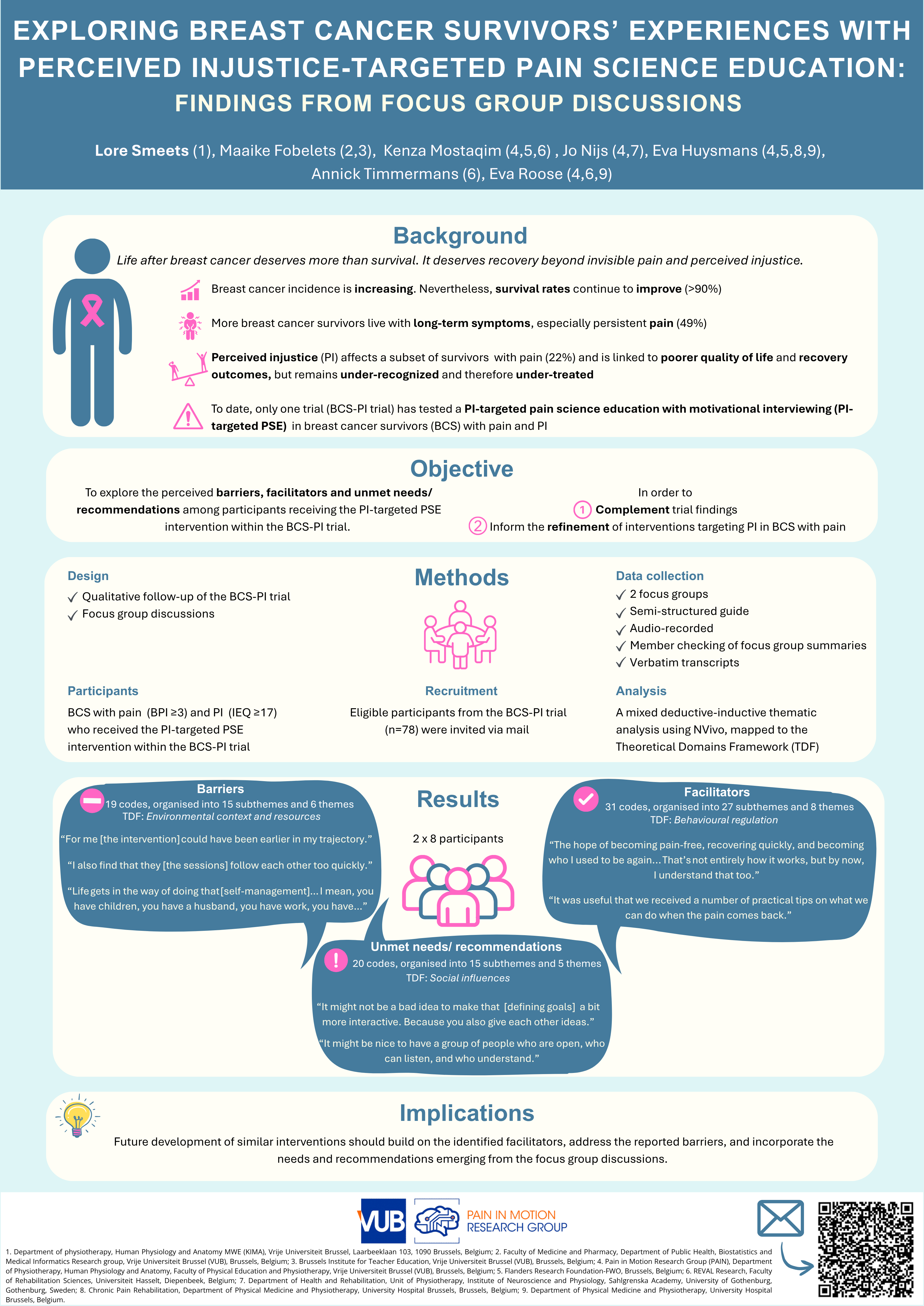
Life after breast cancer deserves more than survival. It deserves recovery beyond invisible pain and perceived injustice.
Breast cancer: surviving is not always the end
Around 1 in 8 women will be diagnosed with breast cancer during their lifetime. Fortunately, about 90% of women survive for more than five years after their diagnosis. However, surviving breast cancer does not always mean returning to life as it was before. Many breast cancer survivors (BCS) continue to experience long-term symptoms related to cancer or its treatment. One of the most common symptoms is pain, which affects almost half of BCS. For some of these women, pain is also accompanied by perceived injustice.
What is perceived injustice?
Perceived injustice refers to the perception that what happened was unfair and that its consequences have had a major and irreversible impact on someone's life. For example, someone may feel that it is unfair that, even after successfully completing cancer treatment, ongoing pain still prevents them from working, exercising, or enjoying time with their family. Perceived injustice is important because it is associated with lower quality of life and poorer recovery outcomes. Despite this, it remains relatively under-recognized and, as a result, under-treated in BCS with pain.
Exploring a new approach to target perceived injustice in BCS with pain
Only one clinical trial has so far investigated an intervention specifically targeting perceived injustice in BCS with pain (i.e., the BCS-PI trial). The intervention combined perceived injustice-targeted pain science education with motivational interviewing. It aimed to help BCS better understand how pain works and what can influence pain, while supporting them in exploring their own motivation, setting meaningful goals, and taking steps towards recovery. To further develop this type of intervention, it is important to understand how participants experience it, especially since psychological factors related to perceived injustice (e.g., anger, anxiety, depression, and blame attribution) may influence engagement with such an intervention and act as barriers to behavior change. Therefore, a qualitative study explored the barriers, facilitators, and needs of BCS who participated in the intervention.
Listening to the experiences of participants
The participants shared a range of experiences that influenced how they engaged with the intervention. These experiences were organized into key domains of the Theoretical Domains Framework, which is used to understand the behavioral factors that can influence people's engagement with an intervention.
Nineteen barriers related to the intervention were identified, mainly linked to domain of environmental context and resources. Participants mentioned practical aspects such as the timing and organisation of the sessions. As one participant explained: “I find that they [the sessions] follow each other too quickly.” In contrast, 31 facilitators were identified and were mainly linked to the domain of behavioral regulation. Participants described how the intervention helped them develop more realistic expectations about recovery after breast cancer: “The hope of becoming pain-free, recovering quickly, and becoming who I used to be again... That’s not entirely how it works, but by now, I understand that too.” Finally, 20 needs regarding the intervention were identified, mainly linked to the domain of social influences. Participants highlighted the need of interaction and learning from each other, particularly when setting goals: “It would be a good idea to do it [defining goals] a bit more interactive. Because you also give each other ideas.”
Towards better care after breast cancer
These findings show that interventions should go beyond their content by considering their feasibility and how they are received by breast cancer survivors. Taking practical factors, behavioral support, and social interaction into account can help refine future interventions and better meet the needs of those living with pain and perceived injustice.
Lore Smeets
Physiotherapist and PhD student at Pain in Motion
2026 Pain in Motion
References and further reading:
The BCS-PI trial protocol: https://pubmed.ncbi.nlm.nih.gov/38233049/
https://pubmed.ncbi.nlm.nih.gov/34323432/
https://pubmed.ncbi.nlm.nih.gov/37762721/
Free PDF available from:
Manuscript will be submitted by the end of 2026.